When a cyclist pulls up to a bike rack, they’re not thinking about planning regulations or how many bikes the system can hold. They’re asking themselves one simple question: Can I trust this enough to leave my bike here?
That decision is often made in seconds. Like with every other choice in life, when you see a cycling area your brain is chock-full of signals – some red and some green. The goal here is obviously to keep it all in the green. Cyclists notice things that many buyers or specifiers don’t, from how solid the rack feels to whether it’s actually easy to lock a bike properly.
A bike rack might tick every box on paper, but if it doesn’t inspire confidence, people may avoid using it altogether. Here are the biggest things cyclists notice when they arrive at a cycle parking area.
Does It Feel Strong Enough?
The first thing many cyclists do is grab the rack, especially if this is their first time using your bike parking. Does it rattle? Feel lightweight? You can kiss their confidence in your racks goodbye.
One of the biggest warning signs is a thin or hollow locking point. While it might look perfectly acceptable from a distance, it can feel weak once you actually use it. A locking hoop should feel solid enough that threading a D-lock or chain through it gives the impression your bike is attached to something substantial, not something that could be bent or cut without much effort.
Security isn’t just about stopping theft. It’s also about trust. If a rack looks or feels flimsy, most cyclists will assume it offers poor protection, whether that’s true or not.
Is the Rack Stable?
A quality bike rack should stay exactly where it is. If it shifts, wobbles or rattles when a bike is being locked, it’s an instant red flag. In your cyclist’s eyes, that wobble raises questions like “Is my bike still going to be here when I come back?” or the more dramatic but nonetheless not impossible “Is someone going to just come and rip the rack and my bike off the ground?”
Movement usually points to poor installation, weak materials or an under-engineered design. Whatever the cause, you don’t want people pondering any questions of the above sort.
Can I Actually Lock My Bike Properly?
This is where some rack designs fall short. Yes,yes. We know we keep saying “frame and wheel” in every other blog post, but it’s not without good reason. Cyclists want to secure the frame and at least one wheel using a single lock. If the rack only makes it easy to lock the front wheel, it’s not providing the level of security most people expect.
We all know how common quick-release wheels are, and locking only the wheel leaves the rest of the bike vulnerable. Cyclists know this, so they’ll immediately check whether the locking point is close enough to the frame to make securing everything simple.
If locking a bike requires awkward stretching, threading locks through tight gaps, or figuring out the best approach, the rack hasn’t been designed with real users in mind.
Will It Damage My Bike?
Racks are there to protect, right? And even if we pretend that’s not their primary reason for existence (which it obviously is!), we absolutely don’t want them damaging anybody’s bikes. Rough welds, sharp edges and uneven coatings aren’t just cosmetic problems. They can scratch paintwork, snag clothing or even damage expensive bike frames.
Well-manufactured racks have smooth welds, clean edges and consistent protective coatings. Those details suggest care has gone into the product, while poor finishing often raises questions about what else may have been overlooked.
Will It Last?
Rust is another thing cyclists notice surprisingly quickly. They don’t want it on their bikes; they don’t want it on the racks either. Surface corrosion doesn’t just make a rack look neglected. It also makes people question how durable and secure it really is.
Outdoor bike parking should be built to withstand years of exposure to the weather. Hot-dip galvanising offers long-term corrosion protection, while powder coating over galvanised steel adds another layer of durability and appearance. If a rack starts rusting not long after installation, confidence in the whole facility can go up in smoke just as quickly.
Is There Enough Space?
And here we don’t mean capacity, although that’s important of course. Here we are talking about the bike parking area as a whole. Nobody enjoys trying to squeeze a bike into an overcrowded rack space.
When bikes are parked too closely together, handlebars collide, pedals catch and getting a bike in or out becomes frustrating. Even if the layout maximises capacity, it often reduces usability.
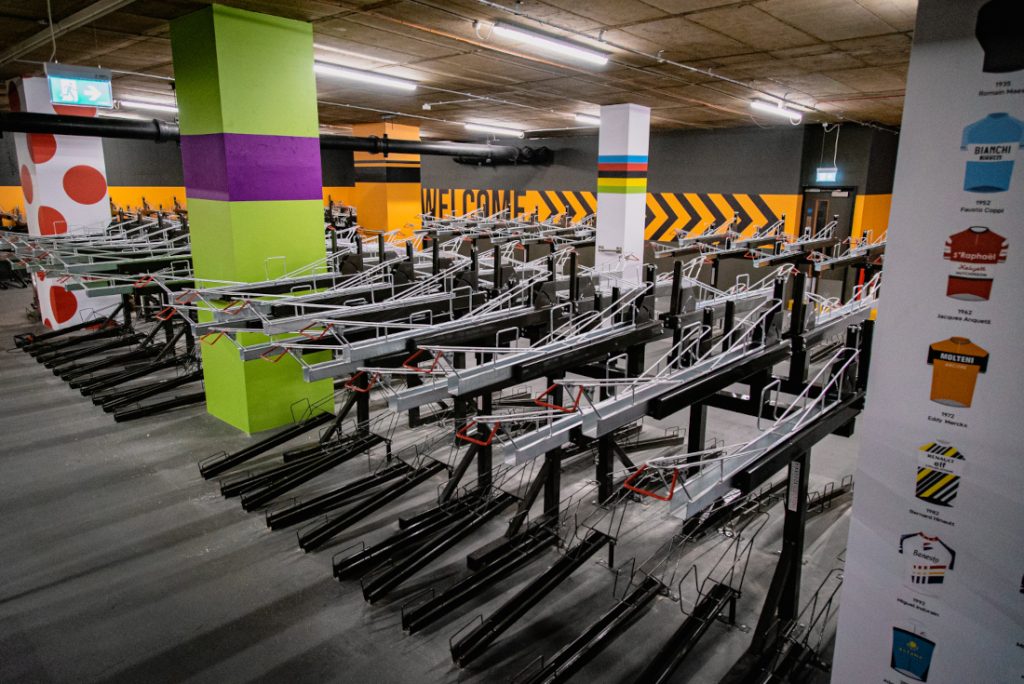
Cyclists appreciate layouts that leave enough room to manoeuvre comfortably without disturbing neighbouring bikes. Well-designed two-tier systems can increase capacity while maintaining usable spacing, but only when properly planned.
If the racks already look cramped before anyone has parked a bike, they’re unlikely to perform well during busy periods.
When It’s Two-Tier, Is the Upper Rack Easy to Use?
Cyclists are often sceptical of upper-tier racks, especially if they’ve used poor systems before or have never used them at all. A heavy-lifting mechanism or jerky movement is enough to put many people off, so everyone fights for the lower spaces instead. We don’t need to point out how that defeats the whole point of having two-tier racks, right?
Good two-tier systems use gas-assisted lifting so trays lower smoothly, require minimal effort and glide back into place without feeling unstable. When they work well, cyclists barely think about using them. When they don’t, the upper tier often sits empty.
Why It Matters
Good cycle parking isn’t defined by how many bikes it can theoretically hold. It’s defined by whether cyclists feel comfortable using it every day, and by the pretty quick judgements people make when they arrive at a bike rack. If it looks secure, feels solid and makes locking easy, they’ll probably use it without a second thought.
If it feels flimsy, awkward or poorly maintained, they’ll think twice about leaving an expensive bike there. Some may choose another rack, while others may decide not to cycle there again at all.
That’s why the small details matter. They influence whether people trust the facility and, ultimately, whether they choose to cycle in the first place. Strong locking points, stable construction, proper spacing, durable finishes and intuitive design all contribute to that confidence. Get those details right, and cyclists may never think twice about your bike racks—which is exactly what good cycle parking should achieve.
