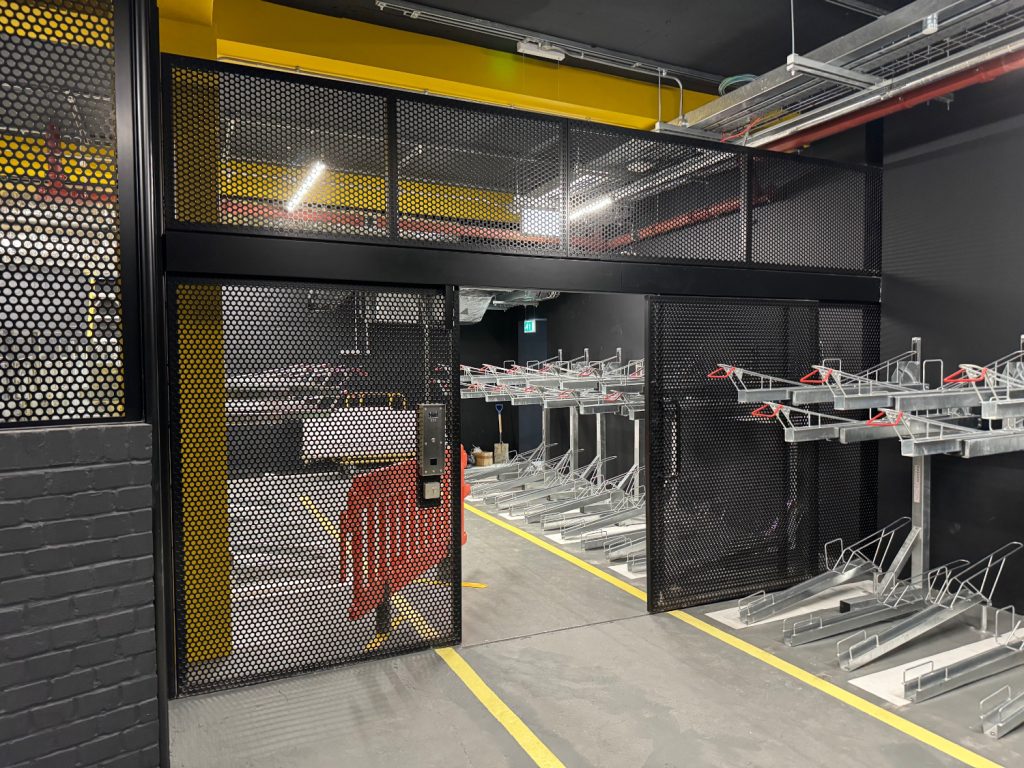
The key to getting more people to cycle is to make cycling an easy option to say “yes” to. This requires creating a functional, safe, and welcoming bike storage area. And that starts with the basics – bike racks. Two-tier bike racks are the perfect tool for setting up an excellent bike storage area that clients, visitors, employees, or residents will love and appreciate.
The two-tier rack is the king of dramatically increased storage capacity, but there’s more to consider than just fitting the racks. This is what this blog is about – thoughtful spacing, lighting, security, and accessibility are also on the list of things you need to tick off to make all the difference between a bike area that’s well-used and one that’s ignored.
Space It Right
Two-tier racks are brilliant for maximising capacity, yes. But let that not fool you – they’re not pure magic and still need room to work properly. Good spacing ensures cyclists can park quickly and safely, reducing frustration and congestion. What does good spacing mean when it comes to two-tier racks? Glad you asked!
Two-tier bike racks are not like other bike racks. You need to think about their centre-to-centre distance and how much space you need for the racks on the ground. The answer is – 375mm is ideal between stands to prevent handlebars and pedals from clashing. However, you also need to be thinking vertically and about height clearance. Here, you need a minimum of 2.4m to allow safe access to the upper tier.
Another important metric is the entrance space, which you need for comfortable use: at least 1.5m for manoeuvring bikes in and out without congestion. We also have a more detailed blog on the dimensions and space requirements of two-tier racks, which you can read for more information. When it comes to a specific project, you can also give us a call or email us – we are always happy to help.
Lighting Matters
Lighting is another small but punch-packing comfort for users. A well-lit bike storage area isn’t just about aesthetics — it’s about safety and usability. Bright, even lighting helps cyclists feel secure, especially in early mornings or evenings and in areas that may not have good natural light.
Installing lighting is a way to avoid deep shadows or dark corners where bikes could be tampered with, or thieves can feel protected. Proper illumination encourages consistent use and deters theft or vandalism.
Security is Key
The first thought people usually have when planning to ride to a destination is: Where can I park my bike? If the answer is “a lamp post/fence”, then the next question automatically pops into their head – is that safe? Nothing stops cycling adoption faster than the fear of having a bike stolen. Bike racks of any kind solve at least half that problem – a dedicated place to park a bike without worrying you’re bothering anyone or impinging on someone’s property. However, not all racks are particularly safe. Two-tier racks have the benefit of being some of the safest and most secure racks on the market. Why? They are made of steel, hard to tamper with, and allow both the frame and wheels to be secured.
Saying that, you can never have too much security, so when designing a bike parking area, think about additional things that might trip up would-be thieves. CCTV coverage is one. You monitor the area and deter opportunistic theft. Positioning is another – choose a visible location with natural foot traffic where it would be hard to try and steal a bike unnoticed. And lastly, you can add another layer of physical security by installing access control systems, such as key locks, swipe cards, or doors with locks.
Accessibility for Everyone
Two-tier racks are versatile and have all sorts of benefits over other racks, but to be truly useful, you need them to be accessible. This can mean making sure you buy something like ours – with a gas-assisted lifting mechanism to make it easier to place bikes on the upper tier without heavy lifting. Our racks also have sloping channels on the lower racks that reduce bending and strain, and wheel and frame support ensures bikes are stable while being stored.
Lastly, when choosing a location, make sure it is easy to get to. Think about obstacles like stairs, small elevators that can’t fit a bike, or narrow paths that a bike wouldn’t be able to navigate, and eliminate them if possible, or add improvements like ramps and so on.
Complementary Amenities
A perfect bike storage area isn’t just about the racks. There are a lot of add-ons which you can install and create a little oasis for cyclists. The bare minimum for outdoors should be two-tier racks and a shelter to protect both your racks and cyclists’ bikes.
If you have more space and budget, you can think about installing lockers and changing facilities to help longer-distance cyclists or those cycling to work. Repair and pump stations are another excellent little perk which helps people do quick fixes. There is no limit to what you can add if you have the space and budget – drying stations, hair driers, laundry services and so on. But even small amenities can turn a basic storage area into a true cycling hub.
Thoughtful Design Drives Usage
Two-tier bike racks give you the ability to store more bikes in less space—but they won’t be the effective tool they can be if you don’t do them right. The layout, lighting, security, and accessibility are what make a storage area genuinely effective. And to elevate it to an even more well-designed area, you can think about thoughtful additional amenities to make life easier for users. This combination, plus two-tier bike racks, should give you maximum capacity, increased use, protected bikes and cyclists, and you will be well on your way to your sustainability goals.
