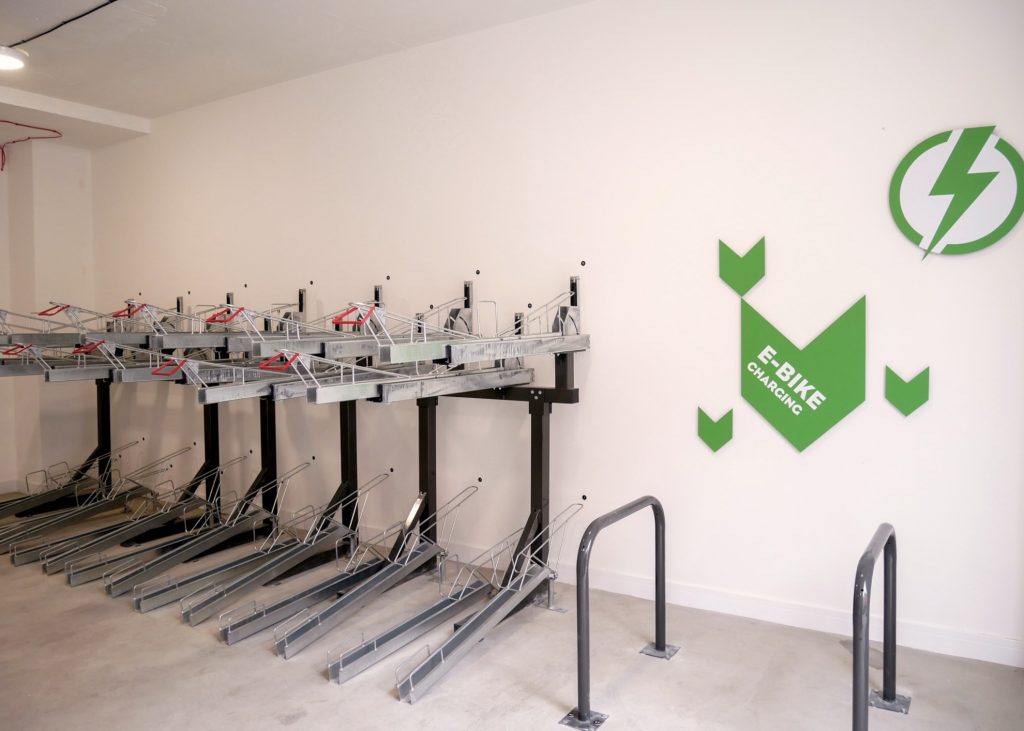
E-bikes are having a moment, and it’s easy to see why. They make longer commutes feel manageable, flatten hills, and open up cycling to a much wider range of people. This is good news for our cities – more people cycling means healthier communities, lower emissions, and less pressure on car parking.
But with the changing nature of bikes, there needs to come a change in bike parking. Storing e-bikes isn’t quite the same as storing standard bikes. The more people hop on electric bikes, the more we will need practical solutions to the new challenges that come with storing them. Parking e-bikes safely, efficiently, and in a way that actually works for everyday users isn’t that hard, and the good news is that with the right setup, it is very manageable.
Let’s take a closer look at the key issues of e-bike storage and how modern electric two-tier bike rack systems help solve them.
Heavier Frames
If you’ve ever tried lifting an e-bike, you’ll know straight away these aren’t lightweight machines. Thanks to built-in motors and batteries, e-bikes are significantly heavier than traditional bicycles.
Lifting an e-bike onto an upper tier of a rack sounds no fun at all. Users might rightfully worry about injuring themselves or damaging their bike if they drop it. And poorly designed racks might actually fulfil their worst fears, making the process unsafe or awkward.
However, when well designed, modern two-tier racks should eliminate all of these issues. When designed with ease of use in mind and smart features, like gas-assisted lifting mechanisms to take most of the weight out of the process, lifting a bike onto the top level can be easily done by anyone. The gas strut means users don’t really need to physically lift their bike as much as just slide it into place and push a little on a handle. Add in smooth-rolling channels and stainless steel bearings, and the movement becomes controlled and manageable, even with a heavier bike.
In reality, a well-designed two-tier rack makes storing an e-bike far easier than many people expect.
Wider Tyres and Larger Frames
E-bikes often come with chunkier tyres, longer wheelbases, and slightly bulkier frames. That’s great for stability and comfort, but it can cause problems with older or poorly designed racks. Tyres may not fit narrow wheel channels, frames can feel cramped in tight spaces, and bikes might knock into each other.
However, purpose-built, quality two-tier racks are made with a range of bikes in mind. They accommodate a lot of different cycle types, including mountain bikes, hybrid bikes and e-bikes with wider tyres.
With properly spaced channels and stable support systems, bikes sit securely without wobbling or overlapping. This not only protects the bikes but also makes the whole parking experience more seamless and less stressful.
Higher Value
E-bikes aren’t cheap, which unfortunately makes them a more attractive target for theft. It also makes them more of a worry for owners, and they are understandably extra cautious about where they leave their e-bikes. Inadequate racks can make it difficult to lock bikes properly, which is why e-bike users need safe and secure bike parking even more than regular cyclists.
Two-tier racks are such a good parking solution for e-bikes precisely because they are already designed with high security in mind. Why? They allow both the frame and wheel to be locked, have integrated locking bars for added stability and are built from durable, hard-to-tamper-with materials.
User Confidence and Accessibility
Not everyone is a seasoned cyclist. For many people, especially those new to e-bikes, confidence plays a big role in whether they’ll actually use the facilities provided. Like we already mentioned, there may be concerns about lifting heavier bikes or general uncertainty about how the racks work.
To help solve these issues, we have ensured that our designs are intuitive to use. Thoughtful crafting goes a long way in helping people use the racks. We have made sure there are features like sliding channels so people don’t have to bend awkwardly. We have built our two-tier e-racks with a smooth, guided lifting mechanism, and the locking points are fairly obvious. This clear, intuitive layout makes the experience feel simple and accessible. And importantly, having both upper and lower tiers gives users a choice—those with heavier bikes can opt for the lower level if they prefer.
Space Constraints and The Future
Today’s storage may fail to meet tomorrow’s demand. As more people switch to e-bikes, the demand for parking will grow. This, however, doesn’t change how much space places have since space doesn’t magically increase when we need it to.
And this is the perfect space-saving scenario where two-tier bikes perform their best work. Traditional racks take up a lot of room, and sites quickly become overcrowded when demand is not met. Bikes end up parked in unsuitable places, and the whole point of having a bike parking area goes down the drain.
By using vertical space, the two-tier e-bike racks can double the number of bikes stored in the same footprint. That means more capacity without expanding the area, better organisation and less clutter. This new, cleaner, more professional-looking space is as close to bike parking magic as it gets, and for offices, residential developments, and transport hubs, this is a game-changer.
Smarter Storage for Smarter Bikes
E-bikes are changing the way people move, and that’s a positive shift for businesses, communities, and the environment. But to fully support this change, the right infrastructure needs to be in place. And yes, e-bikes bring a few extra challenges: they’re heavier, more valuable, and slightly bulkier. But the takeaway from all of the above is that, with well-designed two-tier bike racks, these challenges aren’t barriers; they’re just considerations to keep in mind when deciding which products to buy.
In the end, it’s not about forcing e-bikes to fit outdated storage solutions. It’s about designing smarter systems that match how people actually ride today. Two-tier racks do exactly that, integrating efficiency, security, and ease of use to support the continued growth of cycling. As e-bikes become the norm rather than the exception, investing in thoughtful, future-ready storage isn’t simply practical; it’s essential.
