When you’re planning a bike parking area — whether it’s for a workplace, school, station, or residential building — people usually think about capacity, looks, and features. It’s easy to focus on the racks and shelters and forget what’s happening under them. But one thing any bike parking space needs is a solid way of fixing the racks and shelters to the ground.
Why? Because the way your two-tier racks or shelters are anchored has a big impact on how secure, stable, and long-lasting the installation is. Let’s break it down in a way that actually makes sense.
Why Fixing Matters at All
Simply put – if a rack or shelter isn’t properly secured, things can go very wrong. How your bike parking is fixed to the ground plays a huge role in how well it performs in the long term. Even the best-designed rack won’t live up to expectations if it hasn’t been installed properly, so this is one step that’s well worth getting right from the start.
First and foremost, good fixing is about stability and safety. Do you like the sound of “wobbly rack”? We didn’t think so, and neither do we. If a rack or shelter isn’t securely anchored, it can start to wobble, shift, or feel unstable—especially once it’s fully loaded with bikes or exposed to windy weather. This is not a scenario you want played out in your car park. Nobody wants to park their bike somewhere that doesn’t feel solid, and a poorly fixed structure can quickly become frustrating (or even unsafe) to use.
There is also the security side of things. The whole premise here is: you buy racks and shelters to keep bikes safe and secure. The lack of proper ground fixing can completely undermine that premise for you. A well-anchored rack is much harder to tamper with or remove, which makes it far less attractive to vandals or thieves. You don’t want to spend good money on a good rack, only to have weak or rushed fixings undo all that secure rack design, leaving the whole installation vulnerable and, in some cases, unusable.
Fixing methods also have a big impact on how long your bike parking lasts. When racks and shelters are properly secured, they’re better able to cope with daily use, weather exposure, and general wear and tear. Solid anchoring reduces movement, helps prevent corrosion around fixings, and keeps everything looking and working as it should for years—not months.
Of course, there’s no one-size-fits-all solution. The best fixing method really depends on what’s going on at ground level. Some surfaces suit bolt-down installations perfectly, while others call for concreted-in fixings. Choosing the right approach can make installation much quicker and smoother, too. For example, bolt-down systems are often faster to install and cause far less disruption on site, helping keep costs and downtime to a minimum.
And lest we forget – there’s the looks. Looks matter, and a bike parking area that’s neatly installed with clean, tidy fixings just looks better. Whether it’s in a workplace, public space, or residential setting, good detailing helps the racks or shelters sit comfortably in their surroundings and gives the whole area a more polished, professional finish.
In short, fixing might not be the most exciting part of a bike parking project, but it’s one of the most important. Get it right, and everything else falls into place.
Two Main Ways to Anchor Racks and Shelters
With our products, there are two main ways to fix them to the ground:
Bolt-Down Fixing
Also known as “the quick and flexible one”. This is a very common way to anchor cycle racks and outdoor shelters when you’re installing them on existing hard surfaces like concrete or paving.
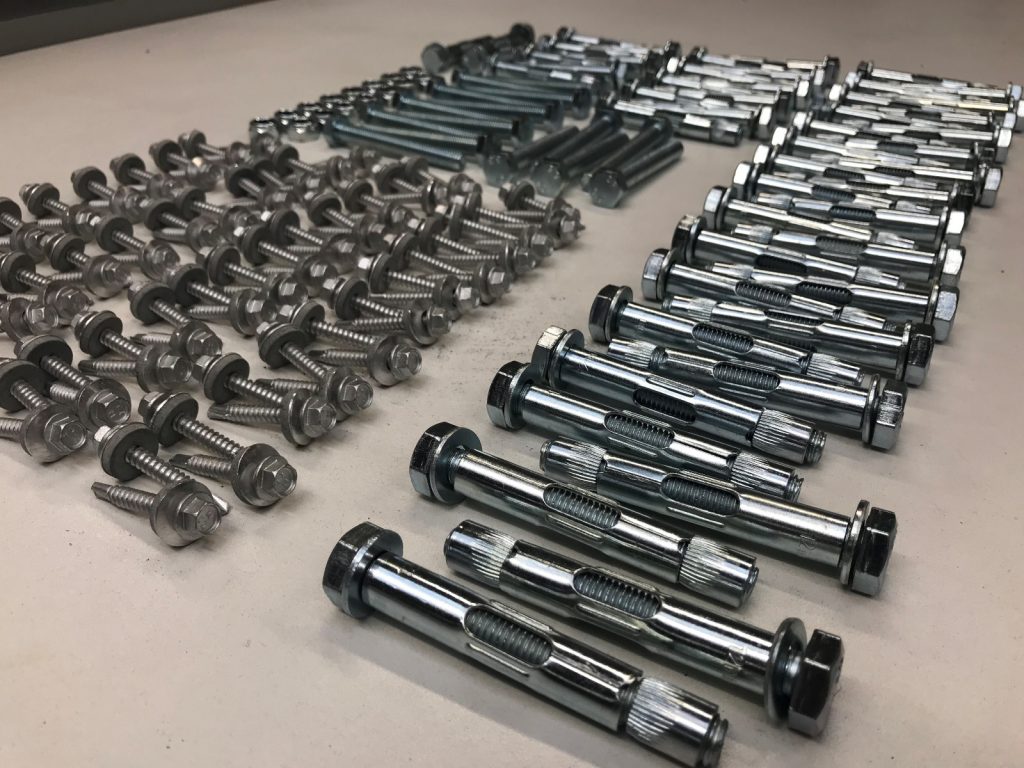
Here’s what happens: the rack or shelter is placed on the surface, strong expanding bolts are inserted through the fixings in the feet/base plates, and once tightened, it’s secure and stable.
Why is this great? Well, as we said, quick and flexible. You don’t need to dig up the whole site. Installation is fast, and relocation is possible in the future. It works brilliantly for retrofit installs.
Concreted-In Fixing
Or as we’d like to call it, “the robust and permanent one”. If you’re installing racks or shelters somewhere where you want top-level stability and permanence, such as station forecourts, transport hubs, or large residential sites, concreted-in fixing is the way to go.
What happens here is: posts or base plates are set into fresh concrete, and then the shelter or rack is bolted or welded into that concrete anchor.
It’s great because it is very secure, which is great in high-traffic areas. It offers maximum resistance to tampering and movement, providing a cleaner, flush look with no bits sticking up.
For example, a large two-tier shelter like the Two Tier Ark Shelter can be installed this way to create a sturdy, long-term cycle parking hub.
Best Practice Tips When You’re Planning Fixings
Here are a few practical tips to keep the installation smooth and long-lasting:
Plan early: Think about fixing points while you’re still designing the cycle parking area so groundworks can be coordinated.
Use quality bolts: Match the high build quality of the bike parking products with strong, corrosion-resistant fixings.
Seal around fixings: A simple bead of sealant helps keep water out and prevents corrosion.
Make sure it’s level: Adjustable feet can help if the ground isn’t perfectly flat.
Fixing your two-tier racks and shelters might not be the most exciting part of a cycle parking project — but it’s easily one of the most important. Done right, it keeps your installation looking tidy, performing well, and giving cyclists confidence that their bikes are safe and secure.
Whether you go for bolt-down or concreted-in, our products are designed to work with both options and make the process as straightforward as possible. If you need help deciding which fixing method suits your site best, just contact us — it’s worth getting this right upfront.
